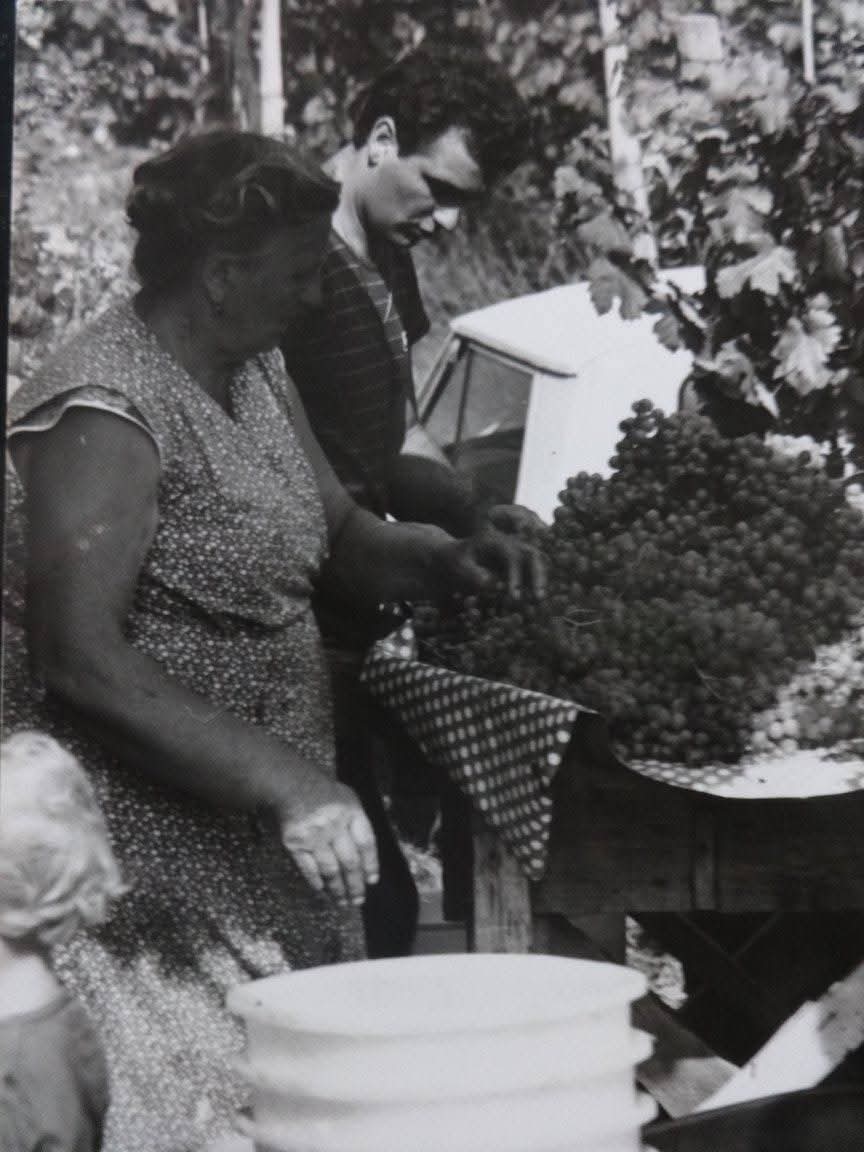
The origins of Cantine Beatrice​

Società Agricola Beatrice S.S. has its roots in the winemaking tradition of the Candia hills, a rugged and fascinating landscape with steep, inaccessible slopes overlooking the sea, sheltered by the majestic Apuan Alps. Here, since Roman times, generations of winegrowers have worked tirelessly to tame this land. In the early 20th century, great-grandfather Armando Della Tommasina and his wife Italia Benassi began clearing the terraces to plant vineyards that have been passed down through the generations. Later, their daughter Beatrice Della Tommasina and her husband Renato Gianni continued this exciting venture, instilling in their son Sauro a passion for viticulture. Giuliana, Sauro’s wife and the daughter of a historic family that championed the Denominazione d’Origine Controllata (DOC) designation for Candia dei Colli Apuani, subsequently worked alongside her husband to pass on this extraordinary winemaking legacy.

Malóro: a history rooted in the land

The name Malóro harks back to the origins of Pietro Rossi, who lived between the late nineteenth and early twentieth centuries. Born in Castagnetola, in the municipality of Massa, Pietro cultivated his own land and worked as a sharecropper, whilst also selling wine produced from the Candia vineyards. His son Cristoforo, after leaving the Carabinieri corps of King Victor Emmanuel II, continued the tradition by opening a wine cellar in the centre of Massa, together with his wife Matilde Antonia, known as Tonina. Over time, the family acquired new vineyards and one of the Pellerano villas, where Cristoforo and Tonina continued to sell wine after the town’s wine cellar closed. The family’s passion seemed destined to fade with grandfather Arnaldo, who embarked on a completely different path in the construction industry.
The guardians of tradition

Today, thanks to the partnership between Cantine Beatrice and Azienda Agricola Malóro, together with the heirs who have decided to carry on this centuries-old tradition, we continue to preserve the values and methods handed down through the generations. Innovation is not seen here as a replacement for tradition, but as a means of improving it and further strengthening its identity. Every decision, from the vineyard to the cellar, becomes a tribute to the heroic viticulture of the Candia hills, celebrating the unbreakable bond between man, land and wine.